Answering calls
AI Receptionist for Small Business: What It Is, What It Costs, and When It Pays Off
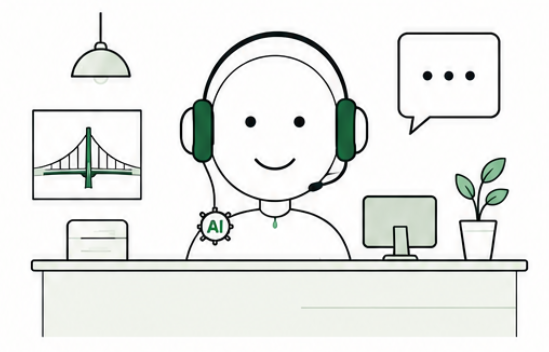
An AI receptionist for a small business is a phone-based assistant that answers calls, handles routine questions, takes messages, and may book appointments using instructions you provide. It can help cover calls when you’re busy or closed, but it isn’t a human, and it should have clear limits for situations that need your judgment.
For contractors, salons, clinics, home services, and professional offices, the practical question isn’t whether AI sounds impressive. It’s whether it helps you respond to callers you might otherwise miss, at a cost that makes sense for your business.
What is an AI receptionist?
An AI receptionist is software that answers your business phone and speaks with callers. Depending on how it is set up, it can share basic information, collect contact details, take a message, route an inquiry, or help book an appointment.
It’s sometimes called an AI answering service or a virtual receptionist. Unlike voicemail, it can ask follow-up questions and organize the caller’s answers. Unlike a person, it can answer multiple calls and work outside your regular opening hours, but it may not handle unusual or sensitive situations as well as a human.
What does it actually handle?
Common tasks for AI phone answering include:
- Answering calls and sharing your hours, location, or service details.
- Asking what the caller needs and collecting their name and callback number.
- Taking a message and sending it to the right person.
- Helping book an appointment when connected to a calendar.
- Giving after-hours callers a clear next step.
- Sending urgent inquiries to someone on your team, if the system is configured to do so.
The system needs good instructions and current business information. If your prices, service area, or availability change, those details should be updated too. For calls involving a complaint, an emergency, or a question that requires expert judgment, make sure callers have a way to reach a person.

What does it cost?
The answering service cost depends on the provider, call volume, call length, features, and how the service counts usage. Some plans charge by the minute or call; others include a set amount of use in a monthly fee. Published plan prices are only a guide, so check what is included and what costs extra.
As a rough reference, one October 2026 comparison of published prices found AI plans ranging from about $49 to $399 per month, and live answering services from about $250 to $2,100 per month. Those ranges are not quotes or guarantees; pricing varies by provider and plan.
Bridge Builders AI’s AI Receptionist page currently lists a $1,299 estimated one-time implementation and $399 per month for 300 conversation minutes. Larger monthly plans include 600 minutes for $499 and 1,000 minutes for $599. Live calendar booking is listed as an additional $129 per month. Extra conversation time is $0.35 per minute, and the customer’s Twilio account is billed directly for its phone number and call minutes. Check the current page and your proposed order for the details that apply to you.
| Option | Cost feel | Hours | Appointment booking | Message quality |
|---|---|---|---|---|
| Voicemail | Usually low added cost if included in your phone plan | Always available to leave a message | No | Depends on how much detail the caller leaves |
| AI receptionist | Typically a monthly plan; rough published range about $49–$399 | Can answer around the clock, subject to the plan and setup | Possible with a calendar connection | Can ask structured questions and confirm details |
| Live answering service | Typically higher; rough published range about $250–$2,100 | Often offers extended or 24/7 coverage; confirm the plan | May be available, depending on service and setup | A person can ask questions and respond to nuance |
These are typical published-price ranges, not guaranteed prices. Compare what is billed, included usage, overages, setup, and any add-ons before choosing.
Bridge Builders AI’s service focuses on professional automated call handling, appointment-booking support, and message routing. It identifies itself as AI, collects and confirms caller details, and delivers confirmed messages. The page also explains its call-recording choice: the caller hears a notice and can choose whether to proceed with recording and transcription.
When does it pay for itself?
A missed call might be a missed job. That doesn’t mean every caller would have booked, but if even one would-be customer reaches a competitor instead, there may be a real cost.
For many trade and home-service businesses, one booked job can be worth hundreds of dollars. Run your own numbers rather than relying on a general claim:
Calls missed per week × share that would have booked × average job value = potential weekly revenue
For example, if you miss 8 calls a week, estimate that 25% might have booked, and your average job is $350:
8 × 0.25 × $350 = $700 in potential weekly revenue
That’s an estimate of revenue at stake, not guaranteed income or profit. Some callers may try again, and some jobs cost money to deliver. For a more useful comparison, factor in your gross margin, then compare the result with the full service cost.
An AI receptionist may be worth considering if you often can’t answer while working, get calls outside business hours, or spend too much time returning calls without knowing what each person needs. If missed calls are rare and voicemail works well for your customers, paying for extra coverage may not make sense yet.
AI receptionist vs. a human answering service
An after-hours answering service can help callers reach someone when your business is closed. An AI receptionist may be a lower-cost way to handle routine questions, take messages, or support bookings at those times. A human service may be a better fit when callers need empathy, careful judgment, or a conversation that doesn’t follow a predictable pattern.
Neither option is automatically right for every business. Think about the calls you receive: How many are basic inquiries? How many need a person? What happens if the system can’t understand someone? And can an urgent call reach you or a staff member?
For some small businesses, voicemail is enough. Others use a virtual receptionist for common calls and keep a person available for exceptions. The goal is not to remove people from every interaction; it’s to make sure routine calls have a dependable next step.
What to check before you buy
Before choosing an answering service for a small business, ask:
- What can it handle? Ask for examples based on your actual calls, not just a list of features.
- How are appointments booked? Confirm that the system can use your calendar and follow your availability rules.
- What happens when it gets stuck? Find out how callers can ask for a person, and where urgent calls go.
- What exactly is billed? Check included minutes or calls, overage rates, short-call rules, and whether phone charges are separate.
- How does it handle caller information? Ask about message storage, call recording, transcription, and how callers are informed.
- Can you test it? Try realistic calls, including a caller who changes their mind, asks something outside your FAQs, or wants to speak with a person.
The answers matter more than a polished demo. A clear setup should fit your business’s hours, services, caller expectations, and follow-up process.
How to start small
You don’t have to hand every call to AI on day one. Start with a limited job, such as answering after hours or taking overflow calls while you’re with a customer. Give it a short list of approved answers and clear instructions about what to collect and when to send a caller to your team.
Then test it using examples from real inquiries. Listen to how it handles a routine booking request, a question it can’t answer, and a caller who asks for a person. Adjust the instructions before expanding its role.
Bridge Builders AI can help you review whether its AI Receptionist fits your call flow. For customer messages outside the phone, SemperChat answers on your website, Instagram, and Messenger. Bridge Builders AI also offers Bookkeeping and Business Website services.
If you’re weighing your options, start a conversation with Bridge Builders AI. You can talk through what your callers need and decide whether a small first step makes sense.